Japan · Asia
Kyoto
Temples, tea houses, and a thousand quiet alleyways.
Overview
Kyoto is Japan's old capital and its cultural heart. Wooden machiya houses line narrow lanes, moss spills over temple stones, and the city's rhythm changes with the seasons — cherry blossoms in April, fiery maples in November, snow on Kinkaku-ji in deep winter.
Neighbourhoods
- GionThe geisha district — wooden façades and lantern-lit evenings.
- ArashiyamaBamboo groves, the Hozu river, and quiet temple gardens.
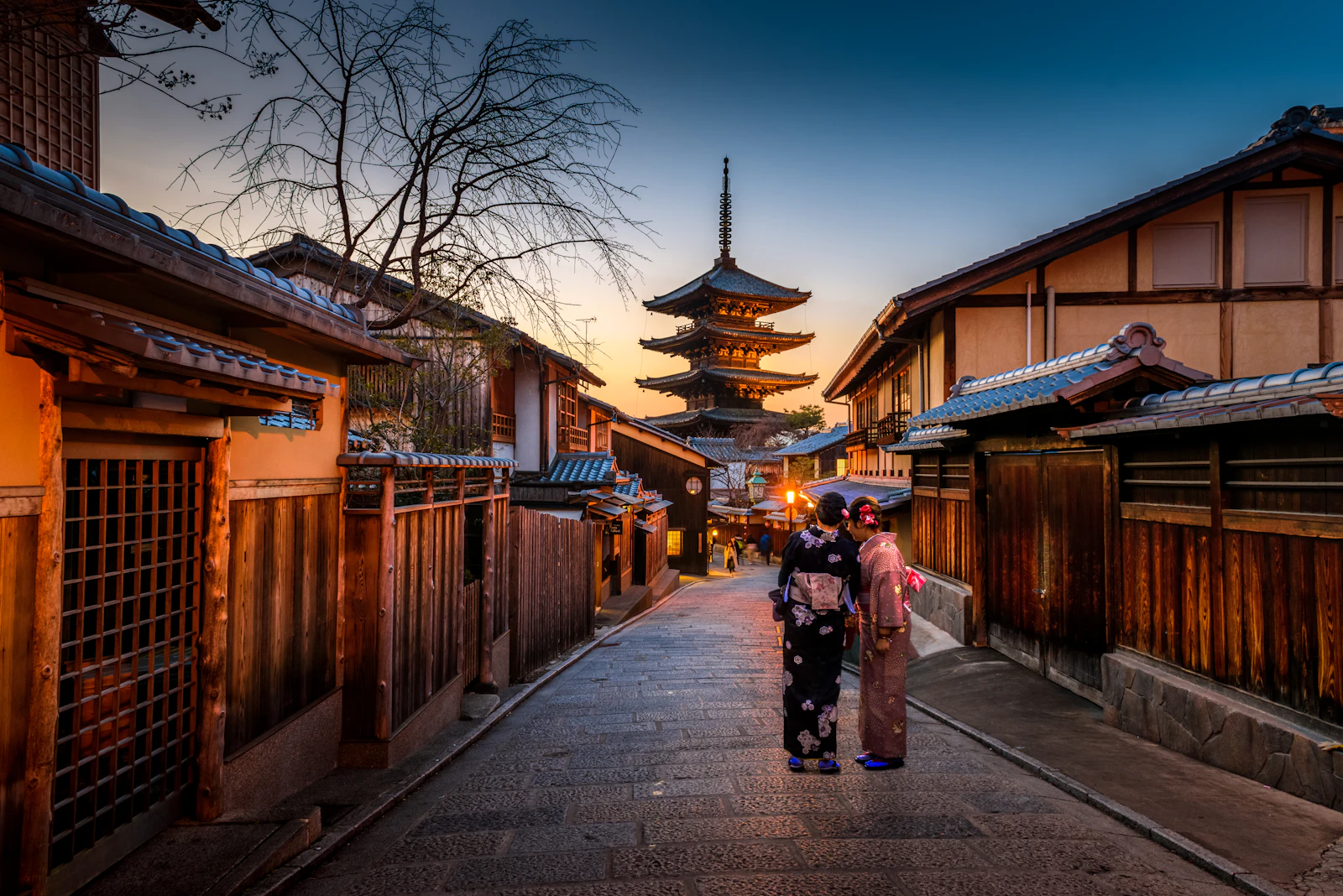
- HigashiyamaSloping cobblestone streets between Kiyomizu-dera and Yasaka.
- PontochoA narrow alley of kaiseki restaurants along the Kamo river.
Top Landmarks
- Fushimi Inari TaishaTen thousand vermilion gates climbing a mountainside.
- Kinkaku-jiThe Golden Pavilion reflected in a still pond.
- Ryoan-jiJapan's most famous rock garden — fifteen stones, only fourteen visible.
- Nijo CastleShogun residence with 'nightingale floors' that sing underfoot.
Food & Cafés
- Nishiki MarketFive centuries of pickles, tofu, and street snacks.
- % Arabica HigashiyamaSpecialty coffee with a view over Yasaka pagoda.
- Ippudo NishikiTonkotsu ramen done with restraint.
- Kaiseki at a ryokanMulti-course seasonal cuisine — book ahead.
Getting Around
Kyoto is walkable in pockets, but buses connect the major sights. A one-day bus pass is the simplest option. Rent a bicycle in Arashiyama; take the JR line to Fushimi Inari.
Sample Itinerary
- Day 1Higashiyama temples, Kiyomizu-dera at sunset, dinner in Gion.
- Day 2Arashiyama bamboo grove, Tenryu-ji, lunch riverside, evening in Pontocho.
- Day 3Fushimi Inari at dawn, Nishiki Market, Nijo Castle, coffee in Karasuma.
Local Notes
- Most temples open by 9am and close around 5pm — start early.
- Cash is still common in small shops and shrines.
- Remove shoes before stepping onto tatami — there's always a step.
- Photography of geisha on Gion's small streets is now restricted.
Continue exploring